Sea Oats Are Spreading Along Highland Beach, One Condo at a Time
November 19, 2026
November 19, 2026
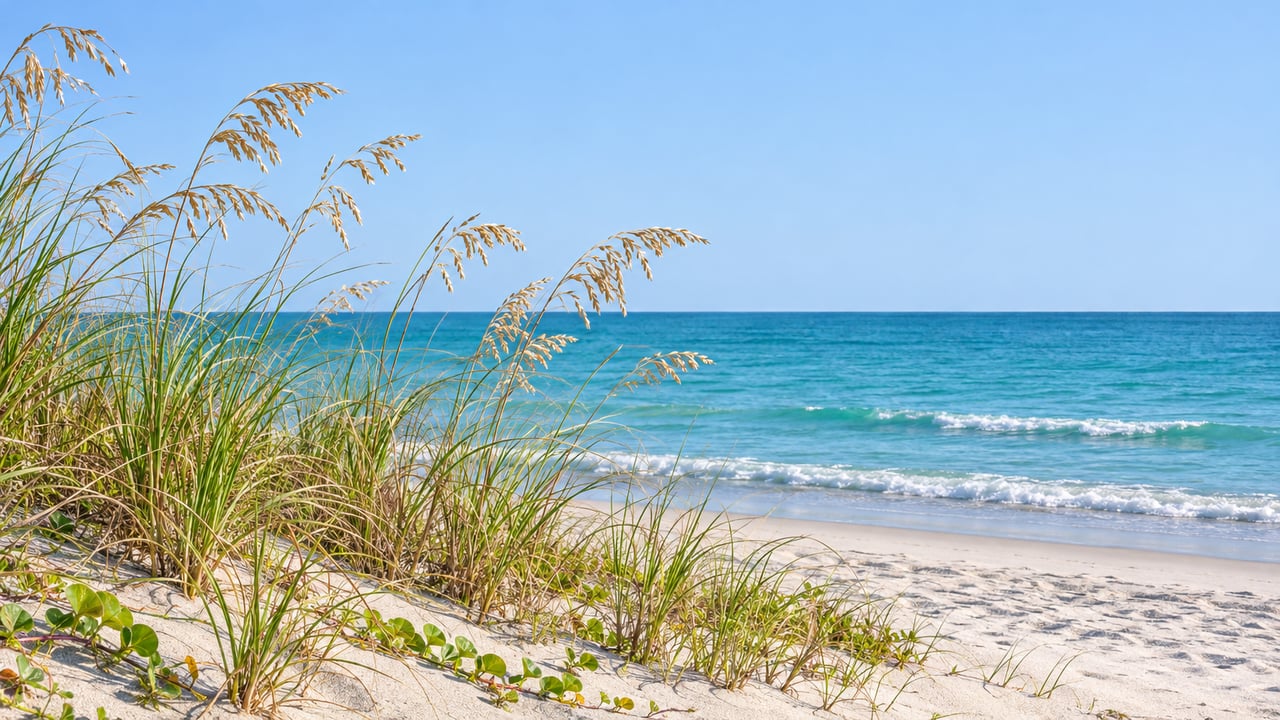
At 8:00 on a January morning this year, 25 students from the nonprofit PROPEL arrived at 45 Ocean on South Ocean Boulevard with shovels. By the end of the day they had planted more than 1,000 sea oat plants along the shoreline, digging, fertilizing and watering each one, with return visits planned at three, six and nine months to check on growth. According to PROPEL's March 2026 newsletter, they came at the invitation of board member John Kotula. The stated goal was a natural barrier to help protect the seawall from erosion and storm impact.
That day was one association's decision. Every stretch of dune in Highland Beach comes down to a decision like it. The town's dune restoration effort works by persuading condominium boards, one meeting at a time. The buildings that have already said yes now make a visible line of sea oats along the town's three miles of coast.
On October 28, 2026, the Town of Highland Beach's Natural Resources Preservation Advisory Board sent a letter addressed to oceanfront condominium managers, and the town posted it the next day. It doesn't announce a project or a deadline. It offers to send a board member to speak at an association's next meeting, and it argues that restoration is simple and inexpensive.
The letter lists three benefits of a native dune system:
As The Coastal Star reported in 2013, dune and structure repairs on Highland Beach's private beaches fell to property owners, not to the town. The advisory board's job is to make the case to the people who decide. Chairperson Barbara Nestle is named as the contact on the letter.
The outreach has been running all year. At its January 7, 2026 meeting, the board heard Nestle's update on which associations had been contacted and which were going ahead with restoration, and members agreed to keep contacting beachfront associations. That record is public as a 2026 Dunes Restoration Status report, provided by the chair in the board's meeting materials. It reads like a walking map of A1A.
The projects the board lists as finished or well established are mostly at the south end of town. The newer plantings are farther north. Here is how the status report and PROPEL's account line up, by address:
| Building | Address | Dune status |
|---|---|---|
| Penthouse Towers | 4748–4750 S Ocean Blvd | An established model dune replenishment and native sea oats project |
| Parker Highland | 4605 S Ocean Blvd | 400 feet of private beach frontage, dune restoration done, credited to Dan Bellante |
| 45 Ocean | 4505–4511 S Ocean Blvd | More than 1,000 sea oats planted by PROPEL students in January 2026 |
| Regency Highland | 3912 S Ocean Blvd | A planting event held in 2025 |
| The Clarendon | 3407 S Ocean Blvd | Invasives removed beginning in 2015, panic grass allowed to seed in 2024, now well established |
| Highlands Place | 2901 S Ocean Blvd | Work begun in 2025, with planting in 2026 |
| Villa Magna | 2727 S Ocean Blvd | Sea oats planted in December 2025, restoration in progress |
The Clarendon's entry shows how slowly a dune comes together. The building started removing invasive plants in 2015. Nine years later, in 2024, panic grass was allowed to seed in front of the first 15 feet of sea oats on the water side. Dan Bellante is credited with the Parker Highland work. The Coastal Star described him in 2018 as a town resident with dune-restoration experience and a co-owner of Green Coast Consulting, already helping the town teach owners about removing invasives and planting natives.
Building projects account for the gaps in the line. Several associations on the report have scheduled dune work after building projects already underway, such as concrete restoration, and one association has a beach project in planning for 2026–27. A board can only take on so much at once. For many oceanfront buildings this year, the work on the structure comes first and the dune comes next.
The Penthouse Towers project shows what the rest of the coast is being asked to copy. The Coastal Star covered it in May 2023. Elaine Prentice, the building's manager at the time, had seen how Hurricane Nicole battered beaches near Vero Beach the previous November, and she set out to strengthen the dune behind her building. The building's beach-raking contractor cleared the exotic plants. Lee Gottlieb, founder of Adopt a Dune, designed the dune and chose the plants. Residents started by planting sea oats, and Gottlieb then added beach sunflower, beach creeper, sea purslane, bay cedar and sea lavender. The Coastal Star reported a cost of under $15,000 and noted that burrowing four-o'clocks came back once the exotics were gone.
Three years before the advisory board's letter, Gottlieb told The Coastal Star:
"The dune system gives you the best and strongest defense against storm surge and hurricanes."
He also told The Coastal Star that a healthy dune can protect a seawall by absorbing some of the wave energy before it reaches the concrete, and that it provides habitat for birds and sea turtles. That seawall reasoning is why 45 Ocean planted in January, and it's what the October letter means by "structural integrity."
The letter's point about trimming costs is easy to misread. Sea grapes are native. Palm Beach County's beach and dune guidelines, posted on the town's website, describe them as an efficient barrier against blowing sand that builds up the back dune, and say they are protected under Florida Department of Environmental Protection regulations, as sea oats are. Sea grapes also keep building lights off the sand where nesting turtles and hatchlings would otherwise be disoriented. That connects to the town's lighting rules, which we covered in our post on why Highland Beach's beach keeps out-nesting its neighbors.
The county guidelines name two invasive plants. The first is Hawaiian half-flower, whose shallow roots and fragile stems fail in high winds and storms. It looks similar to the endangered native inkberry, which is protected by federal law. On the beach, half-flower has white fruit and long leaves, while inkberry has black fruit and rounded leaves. The second is Australian pine, which shades out other plants and eventually leaves a weak spot that storms can erode. Wherever exotics come out, the county recommends replanting with natives suited to that part of the dune.
The board followed the letter with a breakfast. The Highland Beach Dune Restoration Breakfast was scheduled for Wednesday, November 18, at Delray Sands Resort, 2809 S Ocean Blvd. The town billed it as a complimentary breakfast, with a $10 valet parking fee, for residents to learn how neighbors and condominiums are working together to restore the shoreline. It follows an earlier dune event at Delray Sands. After that one, board members agreed in January that they would like to make it annual if the budget allows.
The next stretch of sea oats depends on association agendas. Highlands Place is listed for planting in 2026, Villa Magna's December 2025 planting is still filling in, and PROPEL plans to keep measuring the January plants at 45 Ocean. Any condominium manager or board in Highland Beach can ask the Natural Resources Preservation Advisory Board for a presentation, using the contact listed on its October 28 letter.
On Highland Beach, the dune is part of what an oceanfront building offers, much like its lobby or its pool deck, and it says as much about the care behind a property. If you would like to talk about how a building's beachfront and the way it is maintained shape its presentation and long-term value, Kelly Gerber is glad to walk the sand with you and share what she sees. Let's Connect.
With deep local knowledge and a commitment to excellence, Kelly Gerber provides a refined real estate experience built around your success.
Kelly Gerber
444 E Palmetto Park Rd Boca Raton, FL 33432 Kelly Gerber | License# SL3495841 Douglas Elliman of Florida, Inc. | License# CQ1020232